GLP-3 Reta 10mg is a premium research peptide supplied as a lyophilized powder for laboratory and scientific investigations. This synthetic triple-agonist peptide is designed to target GIP, GLP-1, and glucagon receptors, making it an important compound in metabolic research involving multiple receptor pathways and peptide signaling networks.
As interest in multi-receptor peptides continues to grow, GLP-3 Reta has become a valuable research tool for scientists investigating how coordinated receptor activation influences cellular signaling and metabolic regulation. Manufactured exclusively for laboratory use, this peptide is intended for qualified research professionals conducting non-clinical studies.
GLP-3 Reta is a synthetic research peptide developed to interact with three distinct receptor systems: GIP (glucose-dependent insulinotropic polypeptide), GLP-1 (glucagon-like peptide-1), and glucagon receptors. This triple-agonist design allows researchers to study multiple signaling pathways within a single experimental model.
Because of its multi-target profile, GLP-3 Reta is frequently referenced in laboratory studies focused on peptide-receptor interactions, metabolic regulation, and endocrine signaling. Researchers continue to explore how simultaneous receptor activation may influence complex biological pathways under controlled laboratory conditions.
This product is intended exclusively for scientific research and is not manufactured for pharmaceutical, therapeutic, cosmetic, or veterinary applications.
Product Features
10mg lyophilized GLP-3 Reta peptide
Synthetic triple-agonist peptide
Laboratory-grade formulation
High-purity peptide
Batch-controlled manufacturing
Securely packaged research vial
Intended exclusively for research use
Research Applications
GLP-3 Reta is commonly studied in laboratory settings involving advanced metabolic research and receptor biology. Its ability to interact with multiple receptor systems makes it suitable for investigations exploring complex peptide signaling networks.
Researchers may examine GLP-3 Reta in studies involving:
Multi-receptor signaling
GIP receptor pathway research
GLP-1 receptor investigations
Glucagon receptor studies
Energy-regulation pathways
Peptide-receptor interaction research
Endocrine signaling mechanisms
Multi-pathway metabolic models
These investigations are conducted for scientific purposes only. This product is not intended for diagnostic, therapeutic, or clinical use.
Why Researchers Choose GLP-3 Reta
GLP-3 Reta offers researchers the opportunity to investigate coordinated receptor activity using a single peptide formulation. Rather than evaluating individual receptor pathways separately, scientists can study interactions between GIP, GLP-1, and glucagon receptors within controlled experimental environments.
Our GLP-3 Reta 10mg is manufactured under carefully controlled production standards to help ensure purity, consistency, and dependable quality. The lyophilized powder format provides stability during storage before reconstitution according to established laboratory protocols.
Researchers searching for G-3RT peptide research chemical products often prioritize manufacturing quality and reliable sourcing. Every vial is produced with scientific research requirements in mind.
Quality Manufacturing
Each GLP-3 Reta peptide vial is manufactured using strict quality control procedures designed to promote consistency across production batches. The lyophilized presentation supports peptide stability while allowing laboratories to prepare the product according to established research protocols.
Researchers looking forG-3RT peptide for saleexpect laboratory-grade quality, dependable manufacturing, and secure packaging. Our production standards are designed to meet those expectations.
Storage and Handling
To help preserve peptide quality during research:
Store unopened vials in a cool, dry location.
Protect from heat, moisture, and direct sunlight.
Refrigerate after reconstitution according to laboratory protocols.
Avoid repeated freeze-thaw cycles.
Handle using sterile laboratory techniques.
Proper storage helps maintain peptide stability throughout laboratory investigations.
Research Use Notice
GLP-3 Reta 10mg is supplied strictly for laboratory research purposes only.
This product is not intended for human consumption, veterinary use, or clinical applications. It is not approved to diagnose, treat, cure, or prevent any disease and should only be handled by qualified research professionals.
Frequently Asked Questions
What is GLP-3 Reta 10mg?
GLP-3 Reta 10mg is a laboratory-grade synthetic triple-agonist peptide supplied as a lyophilized powder for scientific research involving GIP, GLP-1, and glucagon receptor pathways.
Where can I buy G-3RT peptide?
You can buy G-3RT peptide from trusted research peptide suppliers offering laboratory-grade products intended exclusively for scientific investigation.
What is GLP-3 Reta studied for?
Researchers commonly investigate GLP-3 Reta in studies involving multi-receptor signaling, energy-regulation pathways, peptide-receptor interactions, and advanced metabolic research models.
Is GLP-3 Reta a research chemical?
Yes. GLP-3 Reta is supplied as a research chemical intended solely for laboratory and scientific use.
Can GLP-3 Reta be used in peptide stack research?
Researchers may include GLP-3 Reta in G-3RT peptide stack studies to evaluate how it interacts with other research peptides under controlled laboratory conditions.
Is GLP-3 Reta used for bodybuilding?
The keyword G-3RT peptide bodybuilding is commonly associated with online searches. However, this product is intended exclusively for laboratory research and is not approved or marketed for bodybuilding or human use.
How should GLP-3 Reta be stored?
Store the lyophilized peptide in a cool, dry environment. After reconstitution, follow established laboratory storage procedures to help maintain peptide stability.
Is GLP-3 Reta approved for human use?
No. GLP-3 Reta is intended exclusively for laboratory research and is not approved for human or veterinary use.
G-3RT appears to be a product abbreviation associated with GLP-3RT, a research peptide described by some suppliers as a triple-receptor agonist. PeptiNova's exact product identity and specifications should be confirmed before publishing compound-specific claims.
What is GLP-3RT?
GLP-3RT is a name used in research-peptide catalogs for a synthetic peptide associated with GIP, GLP-1, and glucagon receptor research. Researchers should verify the molecular identity and sequence listed for the specific product.
What does the term triple-receptor agonist mean?
A triple-receptor agonist is a compound designed to activate three different receptor types. In metabolic research, these may include the glucose-dependent insulinotropic polypeptide receptor (GIPR), GLP-1 receptor (GLP-1R), and glucagon receptor (GCGR).
What is the GLP-1 receptor?
The GLP-1 receptor is a cellular receptor involved in incretin signaling and glucose regulation. Its activity is studied in endocrine and metabolic research.
What is the GIP receptor?
The glucose-dependent insulinotropic polypeptide receptor, or GIPR, is involved in nutrient-related signaling and glucose-dependent insulin secretion. It is one of the receptor systems investigated in metabolic research.
What is the glucagon receptor?
The glucagon receptor is involved in pathways that regulate glucose and energy metabolism. Researchers investigate its activity to understand its role in metabolic physiology.
What research areas are associated with GLP-3RT?
Research involving triple-receptor agonists can explore receptor signaling, metabolic regulation, and interactions between incretin and glucagon pathways. Findings for a particular compound must be supported by evidence specific to that compound.
How does GLP-3RT differ from a GLP-1-only agonist?
A GLP-1-only agonist primarily targets the GLP-1 receptor, while a triple agonist is designed to interact with GLP-1, GIP, and glucagon receptors. The actual activity of any product depends on its verified molecular identity and supporting evidence.
What does a 10 mg research peptide label mean?
A 10 mg label indicates the stated quantity of material in the product. It does not independently establish the peptide's identity, purity, biological activity, or suitability for a particular experiment.
What does lyophilized mean?
Lyophilized means freeze-dried. This process removes water under controlled conditions and can support stability when the product is stored according to its specific documentation.
How can researchers verify G-3RT product quality?
Review the verified molecular identity, peptide sequence where available, analytical purity results, batch number, and quality-control documentation. Product claims should be supported by appropriate testing records.
How can researchers verify G-3RT product quality?
Review the verified molecular identity, peptide sequence where available, analytical purity results, batch number, and quality-control documentation. Product claims should be supported by appropriate testing records.
How can researchers verify G-3RT product quality?
Review the verified molecular identity, peptide sequence where available, analytical purity results, batch number, and quality-control documentation. Product claims should be supported by appropriate testing records.
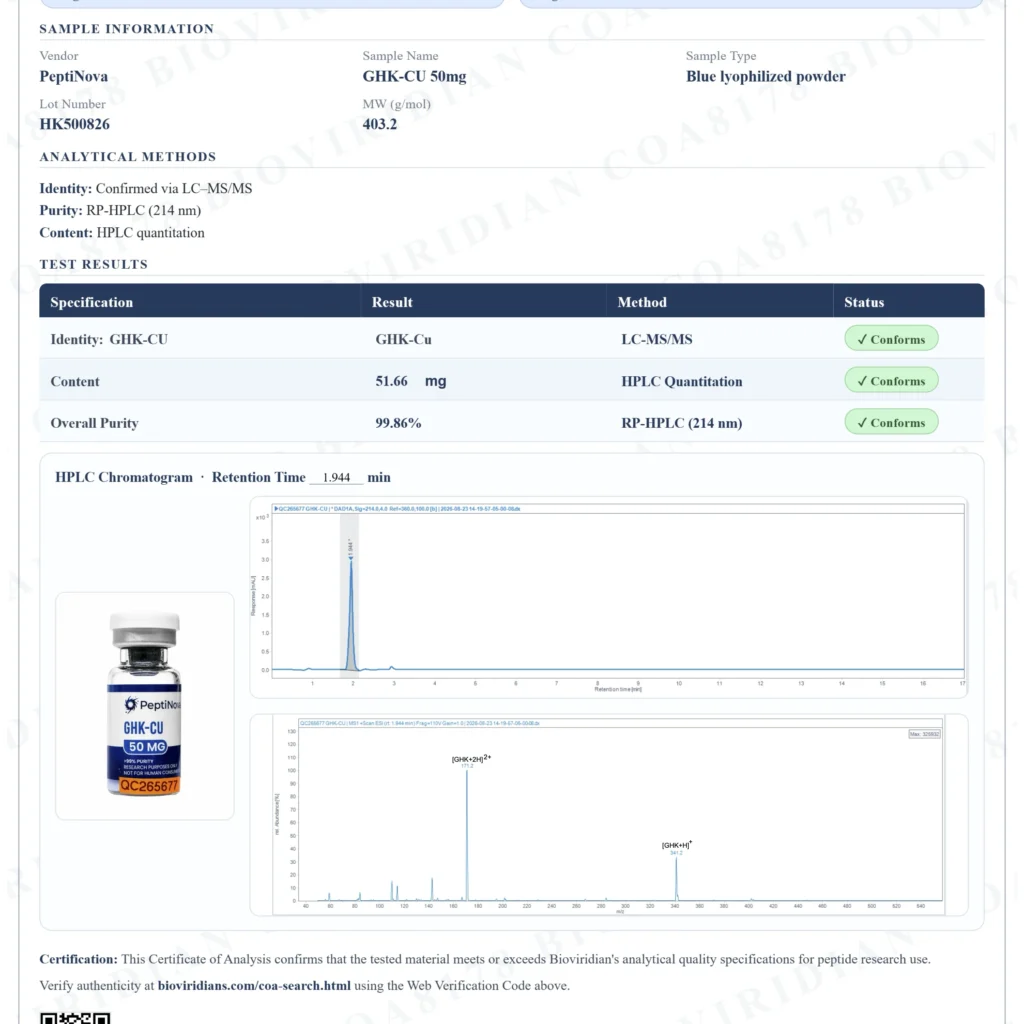
What is a Certificate of Analysis for G-3RT?
A Certificate of Analysis (COA) reports analytical results for a particular batch. Depending on the tests performed, it may include compound identity, purity measurements, and other quality characteristics. Researchers should verify that the document matches the product batch.
How should G-3RT be stored?
Storage requirements depend on the verified compound and formulation. Follow PeptiNova's product-specific documentation rather than assuming that storage conditions from another supplier or peptide apply.