The BPC-157 10mg + TB-500 10mg blend combines two of the most widely studied research peptides into a single, convenient formulation designed for laboratory investigations. By bringing together BPC-157 and TB-500, researchers can explore how these peptides interact across multiple cellular pathways involved in tissue biology, cytoskeletal organization, and cellular communication.
This dual peptide blend has become increasingly popular in research environments because it allows scientists to investigate complementary biological mechanisms using a single research product. While BPC-157 has been explored for its involvement in cellular signaling and tissue-related studies, TB-500, a synthetic fragment derived from thymosin beta-4, has attracted attention for its role in studies involving cell migration, actin regulation, and structural organization.
Manufactured as a lyophilized powder, every vial is produced under carefully controlled laboratory standards to ensure consistency, purity, and reliability for research applications.`
What Is the BPC-157 TB-500 Blend?
The BPC-157 TB-500 blend combines two research peptides that have been individually investigated across numerous scientific publications.
The formulation includes:
BPC-157 – 10mg
TB-500 – 10mg
Rather than studying each peptide separately, researchers frequently utilize this combination to evaluate potential interactions between multiple biological pathways within controlled laboratory environments.
This peptide stack provides a practical solution for laboratories conducting comparative or combination-based peptide research.
Research Focus
Current scientific interest surrounding this peptide blend includes investigations into:
Actin polymerization
Cell migration and motility
Cytoskeletal organization
Cellular signaling pathways
Structural protein interactions
Tissue-related biological processes
Multi-pathway peptide research
Regenerative biology models
Researchers continue to explore how combining these peptides may influence complex biological systems during in vitro and experimental studies.
Why Researchers Choose the BPC-157 TB-500 Combination
Combination peptide research allows investigators to study multiple biological mechanisms simultaneously.
The BPC-157 and TB-500 blend is often selected because it offers:
Two complementary research peptides in one vial
Simplified laboratory preparation
Consistent formulation
Convenient inventory management
Efficient peptide stacking for research protocols
High-quality lyophilized preparation
Instead of preparing multiple products independently, researchers can work from a single standardized formulation.
BPC-157 10mg + TB-500 10mg, BPC-157 TB-500 Research Peptide, BPC-157 TB-500 Blend, BPC-157 + TB-500 Research Compound, BPC-157 TB-500 Peptide Blend, BPC-157 10mg Research Peptide, TB-500 10mg Research Peptide, BPC-157 Research Compound, TB-500 Research Compound, Synthetic Peptide Blend, Cellular Signaling Research, Tissue Biology Research, Peptide Interaction Research, Laboratory Research Peptide, Research-Grade Peptide Blend
Frequently Asked Questions
What is the BPC-157 10mg + TB-500 10mg blend?
BPC-157 10mg + TB-500 10mg is a research peptide blend that combines two distinct synthetic peptides in a product labeled as containing 10 mg of each compound. Confirm the current product label for exact composition and specifications.
What is BPC-157?
BPC-157 is a synthetic peptide consisting of 15 amino acids that has been investigated primarily in preclinical research. Its safety and effectiveness in humans have not been established.
What is TB-500?
TB-500 is a name used for a synthetic peptide related to a region of thymosin beta-4. Product identity and sequence should be verified from the supplier’s technical documentation because terminology can vary between products.
What is TB-500?
TB-500 is a name used for a synthetic peptide fragment associated with thymosin beta-4 research. Its exact molecular identity should be verified using the supplier’s product documentation because naming conventions can vary.
What does the BPC-157 and TB-500 blend contain?
The product name specifies 10 mg of BPC-157 and 10 mg of TB-500. Buyers and research laboratories should check the label and batch-specific Certificate of Analysis (COA) to confirm identity, quantity, and purity.
Does PeptiNova offer peptide blends?
Yes. PeptiNova lists multi-peptide formulations, including GLOW Blend, which the product page describes as containing GHK-Cu, BPC-157, and TB-500. Always verify the composition on the relevant product page.
Does PeptiNova offer custom peptide bundles?
Yes. PeptiNova offers a Build Your Own 5-Pack option that allows customers to select five eligible products in one bundle, subject to the current product listing and ordering terms.
How can I evaluate the quality of PeptiNova research peptides?
Review the available product specifications, documented molecular identity, analytical purity results, batch information, and quality-control records. Quality claims should be supported by appropriate analytical evidence.
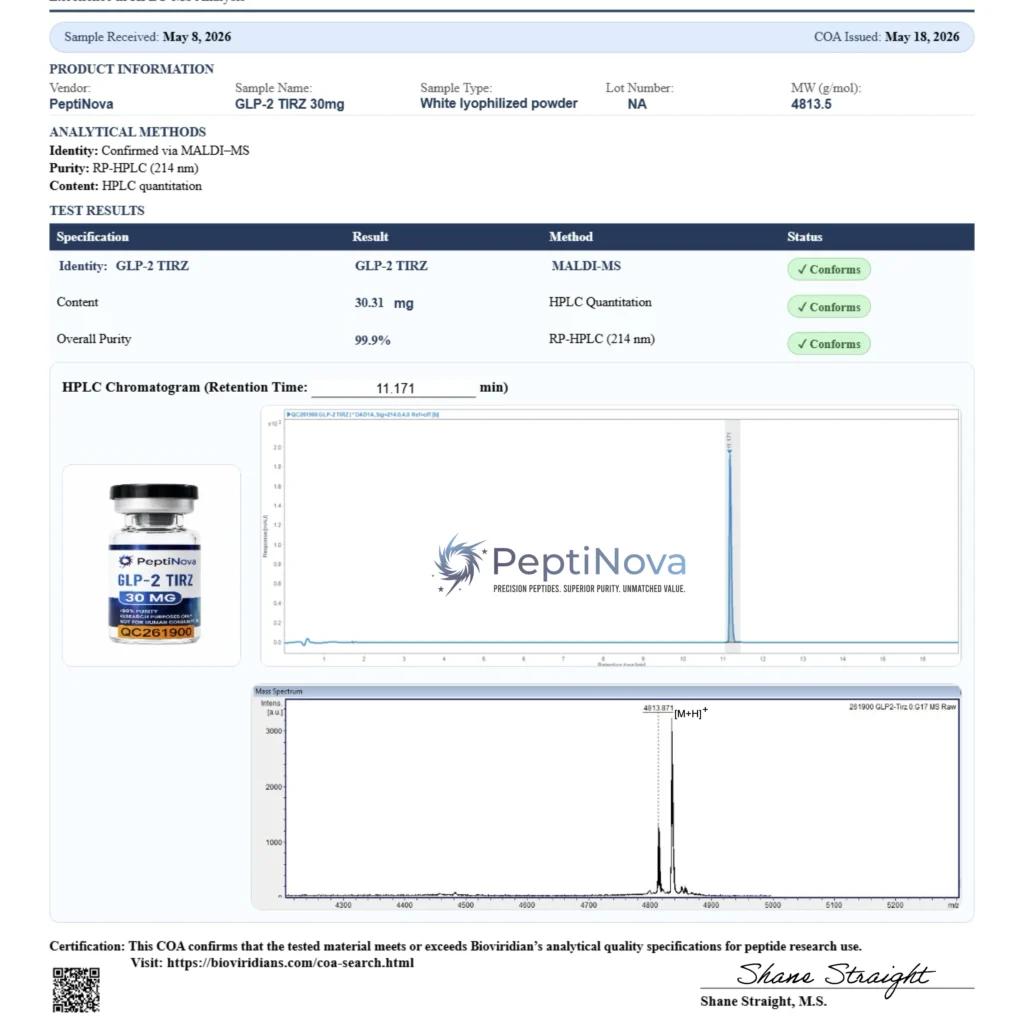
Does PeptiNova provide Certificates of Analysis?
PeptiNova has a Certificates of Analysis (COA) section on its website. Researchers should check the available reports and confirm that the documentation corresponds to the specific product and batch.
What is a Certificate of Analysis?
A Certificate of Analysis is a document reporting analytical results for a particular batch of material. Depending on the tests performed, it may include identity confirmation, purity measurements, batch details, and other quality information.
What does lyophilized mean in research peptide products?
Lyophilized means freeze-dried. This process removes water under controlled conditions and can support stability when the material is stored according to the applicable product documentation.
How can I compare research peptide products?
Compare verified molecular identity, stated quantity, formulation, available analytical documentation, and intended research context. Similar product names do not necessarily indicate identical compounds or biological activity.
How should research peptides be stored?
Storage requirements vary by compound and formulation. Follow the relevant product documentation for temperature, light exposure, moisture protection, and other handling requirements.
Are PeptiNova products approved medicines?
PeptiNova states that its products are intended for laboratory, analytical, and research use only. They should not be represented as approved medicines or as proven treatments for medical conditions.
Are PeptiNova products intended for human or animal consumption?
No. PeptiNova's website states that its products are not intended for human or animal consumption, diagnosis, treatment, cure, or disease prevention. Research-use labeling does not establish safety for use in people or animals.