Melanotan-I is a synthetic peptide developed as an analog of alpha-melanocyte-stimulating hormone (α-MSH), a naturally occurring peptide involved in melanocortin receptor signaling. In laboratory settings, Melanotan-I is widely studied for its interaction with melanocortin receptors and its role in pigmentation biology, receptor pharmacology, and peptide signaling pathways. Its improved stability compared to endogenous α-MSH makes it a valuable compound for researchers investigating receptor activity under controlled experimental conditions.
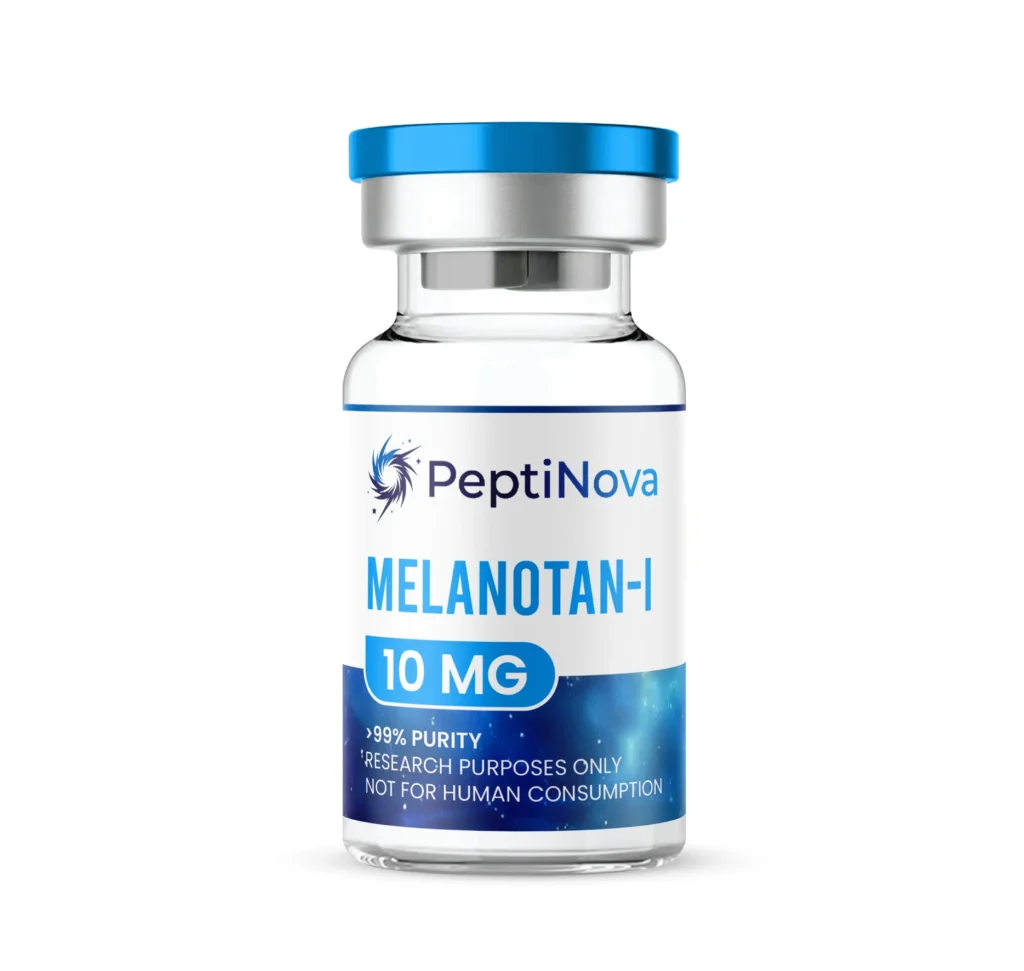
This product contains 10mg of high-purity Melanotan-I supplied as a sterile lyophilized powder. Manufactured under strict laboratory standards, it is intended exclusively for scientific research and analytical applications. It is not intended for human or veterinary use.
Product Overview
Melanotan-I belongs to the melanocortin peptide family and has been investigated extensively for its selective activity at melanocortin receptors, particularly those involved in melanin synthesis. Researchers utilize this peptide to better understand cellular communication, receptor activation, and downstream signaling mechanisms associated with pigmentation and endocrine biology.
Unlike naturally occurring α-MSH, Melanotan-I demonstrates enhanced stability, allowing for more consistent evaluation in laboratory research. Its well-characterized structure has made it one of the most commonly referenced melanocortin analogs in peptide research literature.
These applications are intended solely for scientific investigation and continue to be explored through ongoing research.
Mechanism of Action
Melanotan-I is studied for its ability to bind to melanocortin receptors, particularly receptor subtypes involved in regulating melanin production. Activation of these receptors initiates intracellular signaling pathways that researchers use to examine receptor function, peptide selectivity, and molecular interactions.
Because Melanotan-I exhibits greater stability than endogenous α-MSH, it provides researchers with a reliable model for investigating melanocortin receptor biology over extended experimental periods. Current research also explores its receptor specificity and its value in understanding peptide-receptor interactions.
Product Specifications
Product Name: Melanotan-I
Peptide Content: 10mg per vial
Peptide Type: Synthetic melanocortin analog
Form: Lyophilized powder
Appearance: Sterile freeze-dried powder
Research Grade: Laboratory grade
Intended Use: Laboratory and analytical research only
Researchers should follow all institutional safety guidelines and laboratory protocols when handling this material.
Frequently Asked Questions
What is Melanotan-I?
Melanotan-I is a synthetic analog of alpha-melanocyte-stimulating hormone (α-MSH) that is widely studied for melanocortin receptor signaling and pigmentation-related research.
What form is the product supplied in?
Each vial contains 10mg of Melanotan-I supplied as a sterile lyophilized powder for laboratory research.
What research areas commonly involve Melanotan-I?
Researchers study Melanotan-I in projects involving melanocortin receptor biology, peptide pharmacology, melanin synthesis, endocrine signaling, and molecular biology.
How does Melanotan-I differ from Melanotan-II?
Although both peptides belong to the melanocortin family, they differ in receptor affinity and pharmacological characteristics. Researchers often compare the two compounds when investigating receptor selectivity, biological activity, and peptide structure-function relationships.
Is this product intended for human use?
No. Melanotan-I is supplied strictly for laboratory and research purposes only. It is not intended for human or animal consumption, therapeutic use, or medical application.
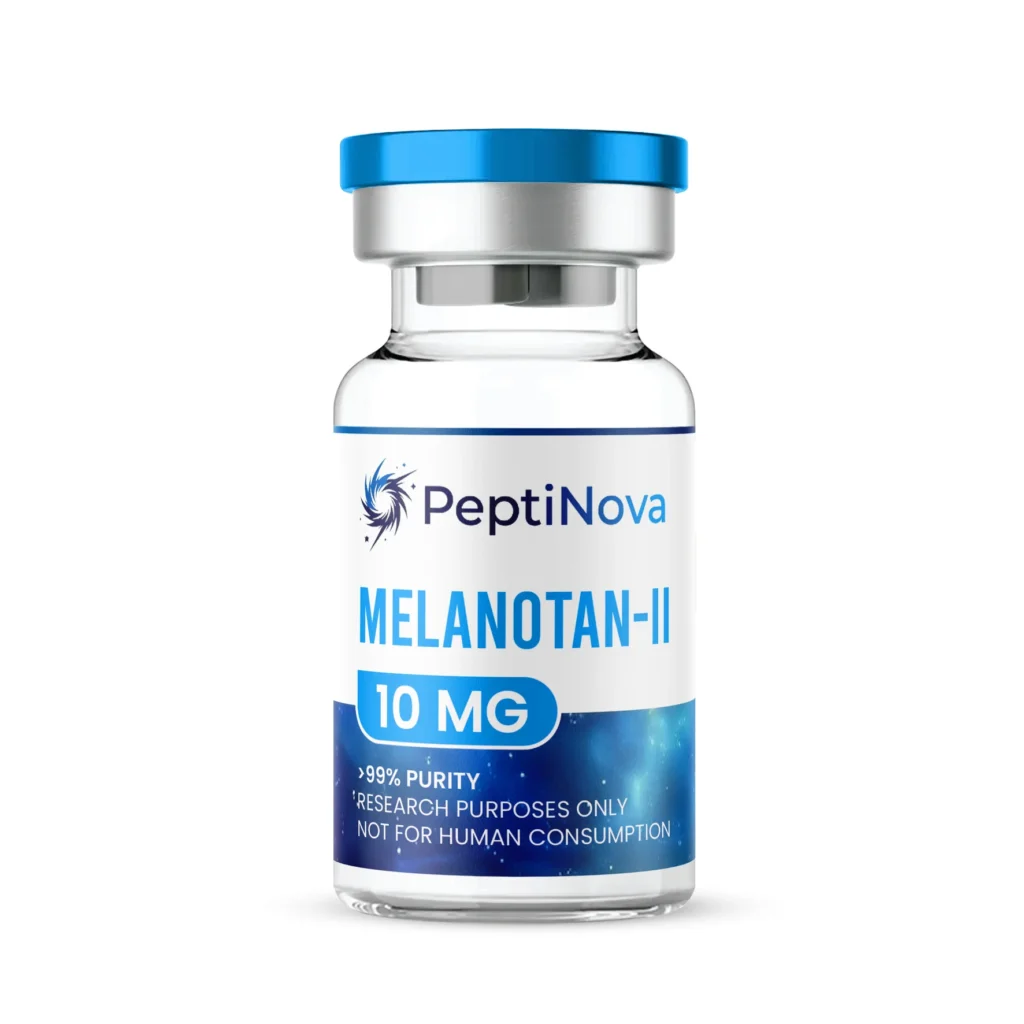
Melanotan I is a synthetic peptide analogue of alpha-melanocyte-stimulating hormone (α-MSH) studied for its interaction with melanocortin receptors and its role in pigmentation-related biological processes. PeptiNova lists a 10 mg research product intended for laboratory use.
What is Melanotan I also known as?
Melanotan I is associated with afamelanotide, a synthetic α-MSH analogue. Researchers should verify the identity and specifications of any research product rather than assuming that all products marketed under this name are equivalent to an approved pharmaceutical formulation.
How does Melanotan I relate to melanin production?
Melanotan I-related compounds have been studied for their ability to activate melanocortin pathways involved in melanin synthesis. The extent of any biological response depends on the specific compound, formulation, and experimental conditions.
What is α-MSH?
Alpha-melanocyte-stimulating hormone is a naturally occurring peptide involved in melanocortin signaling. It participates in biological processes that include regulation of pigmentation.
What are melanocortin receptors?
Melanocortin receptors are a family of G-protein-coupled receptors involved in several biological signaling pathways. Different receptor subtypes have different functions, so research findings should be interpreted in relation to the receptor being investigated.
What is MC1R?
MC1R stands for melanocortin 1 receptor. It plays an important role in pigmentation biology by participating in signaling pathways that influence melanin production.
What is the difference between Melanotan I and Melanotan II?
Melanotan I and Melanotan II are distinct synthetic peptides with different structures and pharmacological profiles. They should not be treated as interchangeable, and findings associated with one compound should not automatically be applied to the other.
What does the 10 mg specification mean?
The 10 mg designation describes the stated amount of material associated with the product. Researchers should confirm the product's labeling, molecular identity, and batch documentation rather than assuming that the stated quantity establishes purity or potency.
What is afamelanotide?
Afamelanotide is a synthetic melanocortin receptor agonist that stimulates melanin production. The prescription medicine SCENESSE contains afamelanotide and is approved in the United States for a specific indication involving erythropoietic protoporphyria; this approval does not extend to unapproved research products.
Is Melanotan I the same as SCENESSE?
Not necessarily. SCENESSE is a regulated prescription medicine containing afamelanotide in a specific implant formulation. A research product sold as Melanotan I should not be assumed to have the same formulation, manufacturing controls, quality, or clinical status.
How can researchers evaluate Melanotan I product quality?
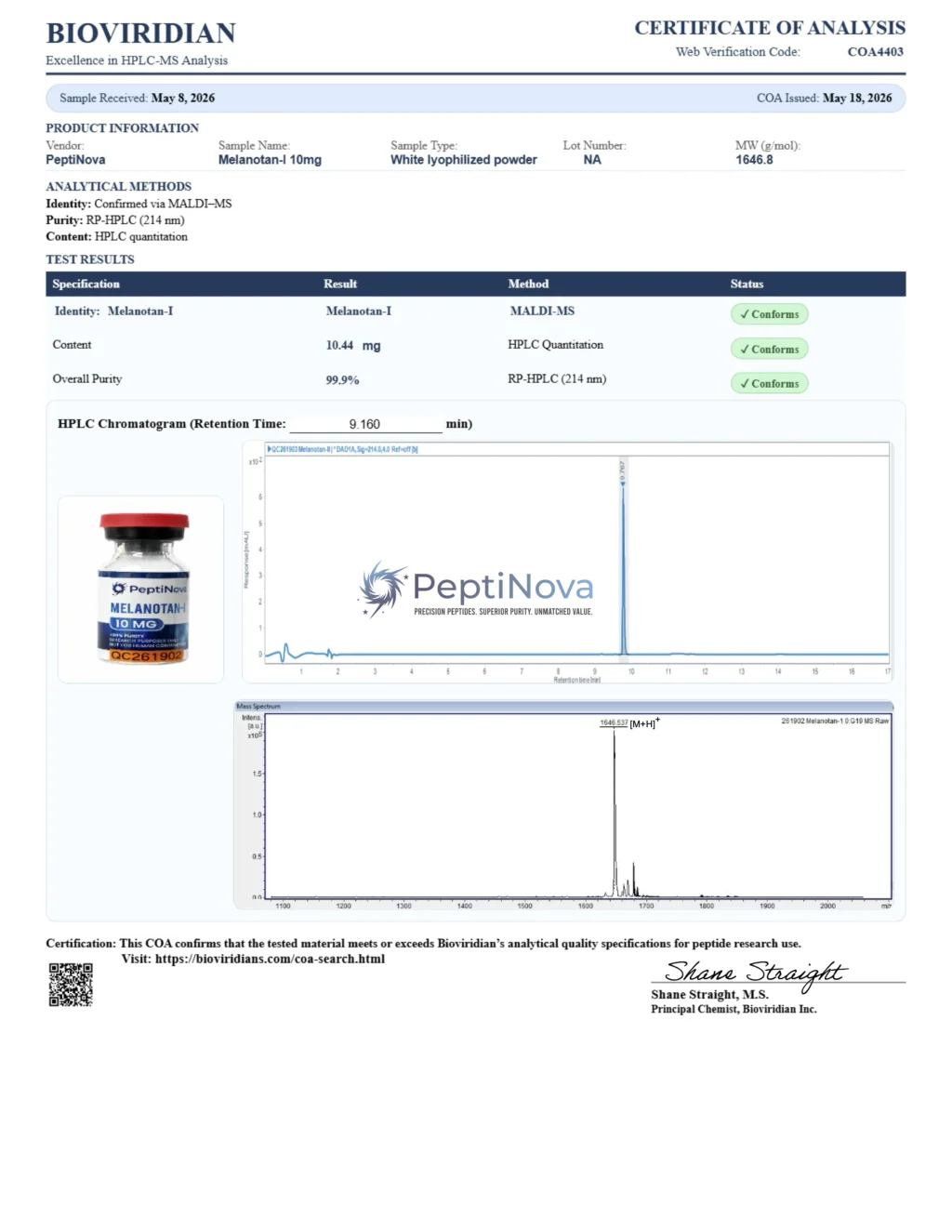
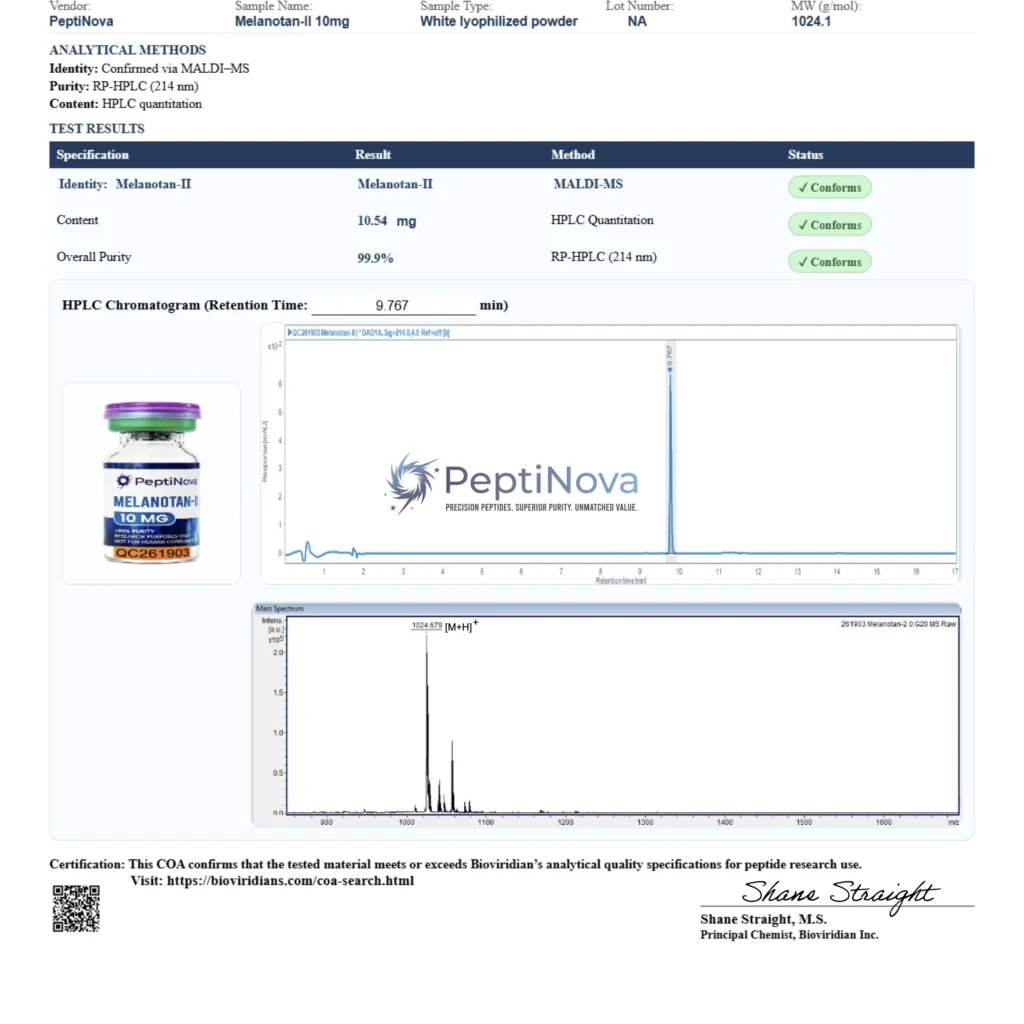
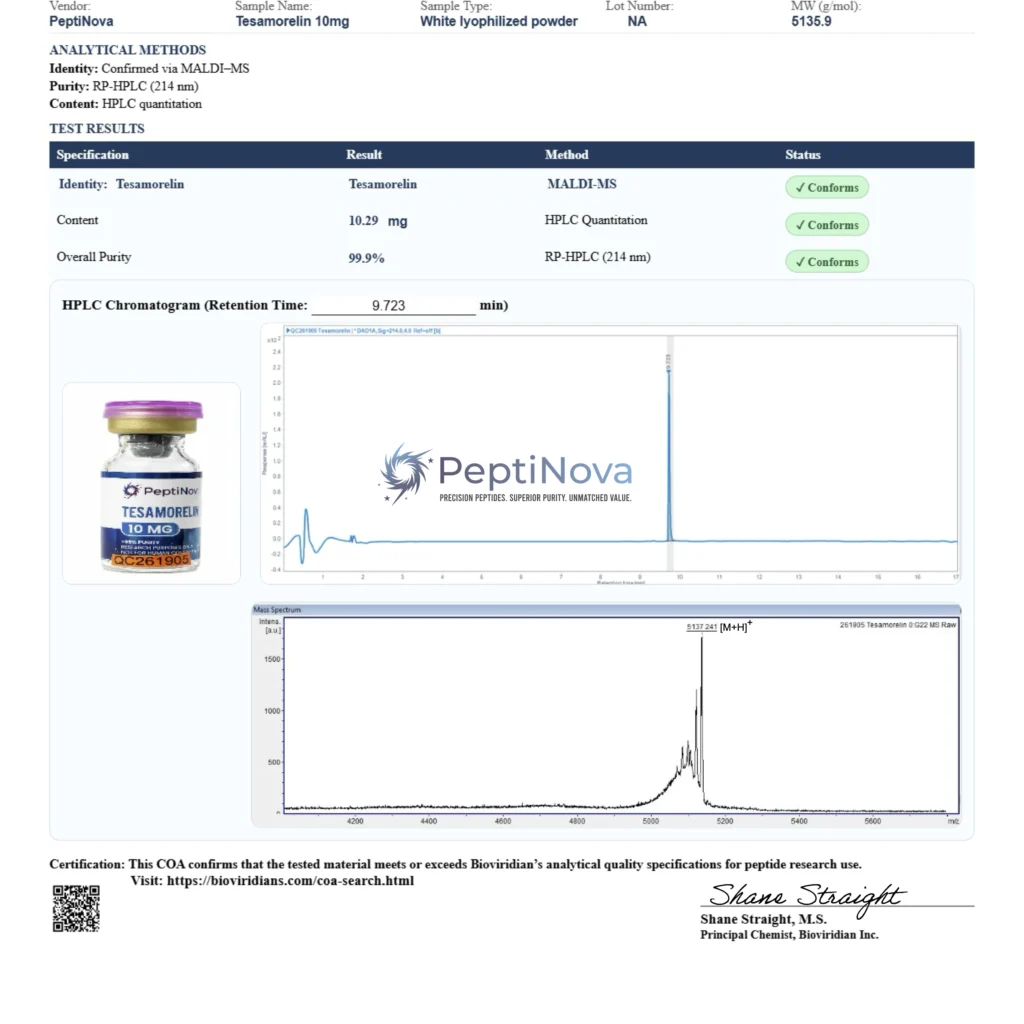
Review the documented molecular identity, analytical purity results, batch number, and available quality-control records. A Certificate of Analysis should correspond to the specific batch being evaluated.
What is a Certificate of Analysis (COA)?
A COA is a document that reports analytical results for a particular batch of material. Depending on the testing performed, it may provide information about identity, purity, and other measured quality characteristics.
Does Melanotan I research prove that a product provides safe tanning or sun protection?
No. Research involving melanocortin signaling does not establish that an unapproved research product provides safe tanning or reliable protection from ultraviolet radiation. Sun-protection measures remain important, and pigmentation should not be considered a substitute for them.
Is PeptiNova Melanotan I 10 mg approved for human use?
The research product should not be considered an approved medicine. PeptiNova states that its products are intended for laboratory, analytical, and research use only and are not intended for human or animal consumption.
What should researchers check before selecting Melanotan I 10 mg?
Review the exact compound identity, product specifications, batch-specific analytical documentation, storage requirements, and intended research context. Do not assume that a research product is equivalent to a regulated prescription formulation or suitable for cosmetic use.